Reviewing Hello World SVG for Modern Embroidery Projects
As a designer who spends more time at the hoop than away from it, I approach every new digital embroidery file with a mix of curiosity and caution. We've all been there: you download a stunning graphic, only to find out it falls apart the moment the needle hits the fabric. That is why I took a close look at the Hello World, Svg Design before committing it to any client work or personal handmade product. This isn't just about whether the image looks cute on a screen; it is about how it translates into thread, how it sits on a sweatshirt embroidery project, and whether it holds up under the scrutiny of a paying customer.
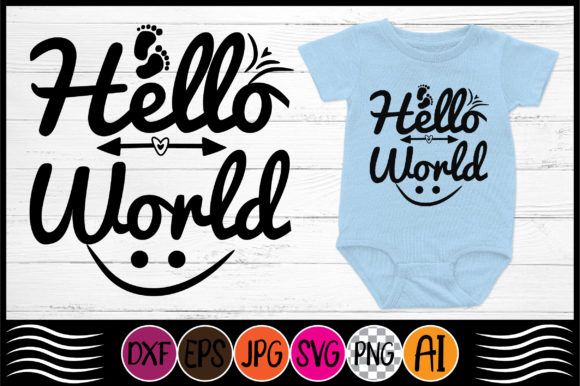
My first impression of the Hello World, Svg Design was its clean, approachable aesthetic. In the world of Crafts and Graphics, "Hello World" carries a specific weight. It is the universal greeting of coding, but in our sphere, it signals new beginnings, baby announcements, or the launch of a creative venture. The layout feels balanced, avoiding the clutter that often plagues downloadable assets. When I opened the zipped file, I found a comprehensive suite of formats including PNG, JPG, DXF, AI, EPS, and the crucial SVG. For an embroidery designer, having the vector files (AI, EPS, SVG) is non-negotiable. These allow us to manipulate the paths before converting them into a machine embroidery design, ensuring that the lines are smooth and the curves are true.
Real-World Application: The Custom Tote Bag Test
To truly evaluate this design, I imagined a specific real-life scenario: creating a custom tote bag design for a local tech meetup. The goal was to produce something that looked professional yet welcoming. I visualized the Hello World, Svg Design stitched onto a heavy canvas tote. Because the design is text-based with likely geometric or soft rounded elements (depending on the specific font style chosen within the SVG), it offers great versatility.
If you are planning to use this for custom apparel, such as a hoodie or a cap, the simplicity of the phrase works in your favor. Complex illustrations can get lost on curved surfaces like hats, but a strong typographic statement like "Hello World" remains legible. However, this is where the designer's eye must take over. You cannot simply import the SVG and hit start. You need to consider the stitch density. If the original graphic has very fine lines, they might not translate well to a satin stitch without becoming too dense and causing puckering. Conversely, if you rely entirely on a running stitch for a sketchy look, you must ensure the fabric texture supports it without the thread sinking in.
Navigating Fabric Choices and Stitch Types
One of the most critical aspects of using a graphic like Hello World, Svg Design is matching it to the right material. For a baby embroidery project, perhaps a onesie or a nursery wall hanging, the softness of the stitch is paramount. A heavy fill stitch might be too stiff for delicate infant skin. In this case, I would recommend adapting the SVG into an applique design. By cutting the shape from a soft cotton or minky fabric and using a tight satin border, you maintain the visual impact of the design while keeping the tactile experience gentle.
On the other hand, if you are creating an embroidered patch for a jacket or backpack, you have more freedom with density. Patches require durability, so a robust fill and clear outlines are essential. The high-resolution PNG included in the package (4500×5400) is excellent for creating printable mockup images for your Etsy shop before you even stitch a single thread. This allows you to show customers exactly how the finished product will look on dark versus light backgrounds.
Caution is advised when working with stretchy fabrics or textured materials like terry cloth. The sharp corners often found in digital fonts can cause thread breaks if not properly compensated for in your digitizing software. Always check the small details. Does the letter "o" have enough space inside to prevent it from filling in? Is the spacing between "Hello" and "World" sufficient to prevent the threads from merging? These are the questions that separate a hobbyist attempt from a professional small shop product.
Commercial Viability and Brand Consistency
For Etsy sellers and creative entrepreneurs, the value of a design lies in its ability to enhance brand consistency. The Hello World, Svg Design fits perfectly into a modern, minimalist brand identity. It appeals to a demographic that appreciates tech culture, education, and modern parenting trends. Whether you are selling holiday embroidery gifts or year-round boutique items, this design acts as a versatile asset.
However, before listing items for sale, you must verify the licensing terms associated with the download. While the file formats suggest professional utility, commercial rights vary by creator. Ensure you are cleared to sell commercial embroidery items featuring this specific graphic. Once cleared, the potential for buyer engagement is high. A well-executed "Hello World" on a high-quality garment signals attention to detail, which builds customer trust.
Practical Notes for the Working Designer
Before you commit to a full production run, here are my top recommendations for working with this specific asset:
- Test on Scrap First: Never skip the test stitch. Use the same fabric and stabilizer you intend to use for the final product to check for registration issues.
- Check Thread Contrast: Since this is a text-heavy design, ensure your thread colors pop against the fabric. A low-contrast choice can make the message unreadable from a distance.
- Stabilizer Selection: For knit fabrics like sweatshirts, a cut-away stabilizer is usually best to prevent distortion over time. For woven totes, a tear-away might suffice, but test it first.
- Hoop Size Verification: Confirm that the design fits within your available hoop size. If the design is large, you may need to split it or resize it, which could affect the clarity of smaller elements.
- Mockup Variations: Create black and white mockups to see how the design holds up without color reliance. This helps identify if the shape alone is strong enough.
- Inspect Small Details: Zoom in on the vector file. Look for stray points or overlapping paths that could confuse your digitizing software.
In conclusion, the Hello World, Svg Design is a solid contender for your library of design assets. Its strength lies in its universality and clean structure, making it adaptable for everything from nursery decor to tech-savvy apparel decorators. However, its success depends entirely on your execution. By respecting the limitations of the medium, choosing the right stitch density, and understanding your fabric, you can turn a simple digital file into a cherished personalized gift or a best-selling item in your catalog. Remember, the file is just the blueprint; your expertise as a maker is what brings it to life.