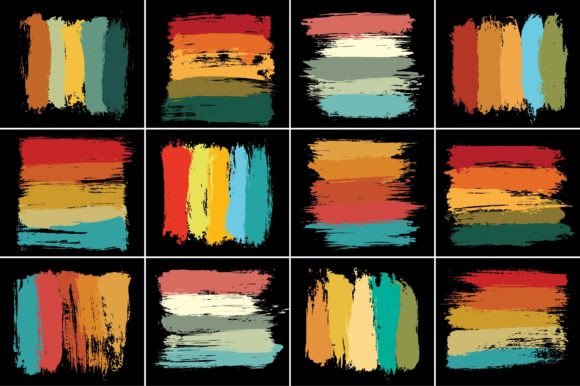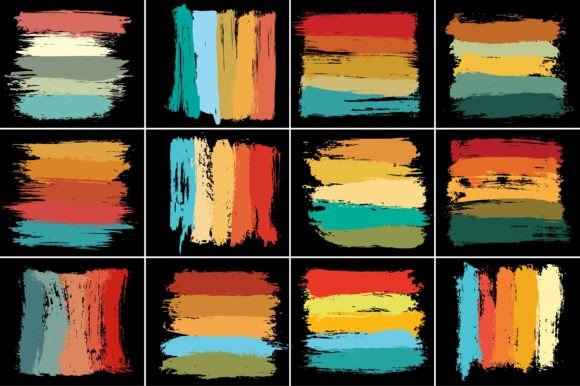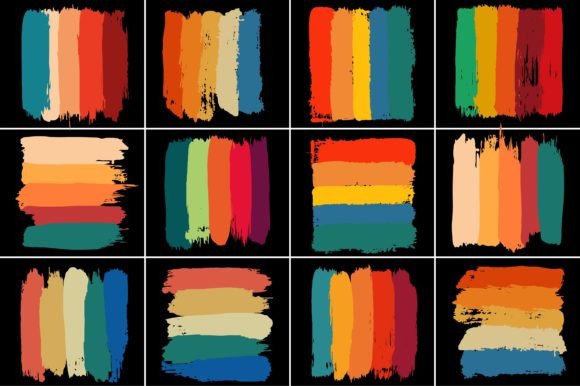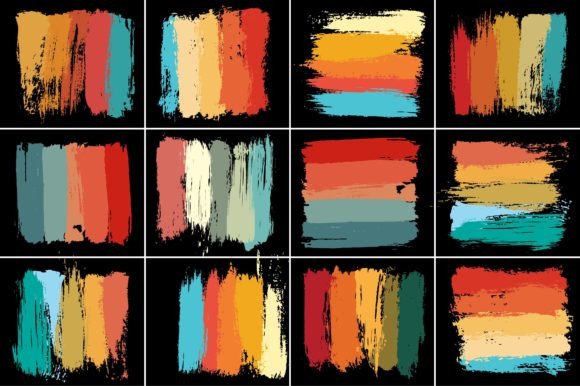
Retro Vintage Paint Brush Stroke: A Designer's Review
As someone who spends most of their day staring at screens and threading needles, I approach new design assets with a mix of excitement and skepticism. When I first pulled up the Retro Vintage Paint Brush Stroke files, my immediate reaction was one of relief. In a market flooded with overly complex, digitized patterns that lose their soul in translation, this set offers something refreshingly raw. The mood it creates is unmistakably artistic and free-spirited, capturing that imperfect, hand-painted aesthetic that is so difficult to replicate with thread. For embroidery designers and small business owners looking to elevate their handmade product offerings, this graphic holds significant potential, provided you understand how to translate its digital fluidity into physical stitches.
Translating Digital Ink into Threaded Reality
The core appeal of the Retro Vintage Paint Brush Stroke lies in its organic shape and layout. Unlike rigid geometric logos or standard monograms, these strokes possess a visual personality that suggests movement and creativity. However, moving from a 300 DPI PNG or EPS file to a tangible embroidery project requires careful consideration. The design does not come as a pre-digitized machine embroidery design with defined stitch types like satin stitch or fill stitch. Instead, it serves as a high-quality template or underlay guide. This means the responsibility falls on you, the designer, to determine the stitch density and thread path.
If you are planning to use this for a tote bag design or a statement piece on a denim jacket, I recommend treating the stroke as a large fill area. Using a textured fill stitch can mimic the grainy feel of ink on paper, enhancing the vintage vibe. Conversely, if you are aiming for a cleaner look on a sweatshirt embroidery project, a dense satin column might work better for the edges, though you must be wary of the "pull" on stretchy fabrics. The lack of pre-defined stitching allows for immense creative freedom, letting you decide whether the final output should look like a bold patch or a subtle, washed-out print.
Real-World Application: The Boutique Tote Scenario
To truly test the viability of these graphics, I envisioned a specific real-life scenario: creating a line of custom tote bags for a local art supply shop. The goal was to produce a small shop product that felt exclusive and artisanal. Using the Retro Vintage Paint Brush Stroke as a background element behind a simple script logo seemed like the perfect fit. The stroke adds depth without overpowering the text, creating a layered effect that feels professional yet approachable.
In this context, the transparent PNGs included in the pack are invaluable. They allow you to create printable mockups quickly to show clients before a single stitch is made. Imagine presenting a client with a digital preview of their logo sitting atop one of these retro strokes on a canvas bag; it instantly elevates the perceived value of the custom apparel or accessory. For an Etsy seller, this ability to visualize the finished product accurately can be the difference between a browse and a buy. The design works exceptionally well here because it bridges the gap between digital Graphics and tactile Crafts, offering a modern twist on traditional embroidery.
Navigating Fabric Textures and Hoop Limitations
While the aesthetic is strong, practical execution demands caution. One of the primary challenges with brush stroke designs is their irregular width. On thin or stretchy fabrics, such as a lightweight cotton tee or a baby onesie for baby embroidery, a wide, dense stitch pattern can cause puckering. If you attempt to fill the entire stroke area on a unstable fabric without proper support, the result will be stiff and distorted. It is crucial to use the right stabilizer. For knits, a cut-away stabilizer is non-negotiable to maintain the integrity of the stroke over time and through washes.
Furthermore, consider your hoop size. Some of the longer strokes in the collection may exceed the capacity of a standard 4x4 hoop, requiring you to split the design or use a larger machine field. If you are working on curved surfaces like caps or hats, the flat nature of the brush stroke might not conform well unless the design is simplified or reduced in scale. Detailed corners and tapering ends of the brush strokes can also become problematic if the stitch count is too high; the threads may bunch up, losing the crisp "ink" definition. Always test the design on scrap fabric first to gauge how the thread colors interact with the fabric texture.
Enhancing Brand Consistency and Customer Trust
Beyond the technical aspects, the choice of design elements directly impacts brand perception. Utilizing the Retro Vintage Paint Brush Stroke consistently across your commercial embroidery projects can help establish a recognizable brand identity. Whether you are making holiday embroidery gifts, wedding favors, or everyday wear, the retro theme conveys a sense of nostalgia and quality. Customers often associate handmade items with care and uniqueness; a well-executed brush stroke background reinforces this by looking intentional rather than generic.
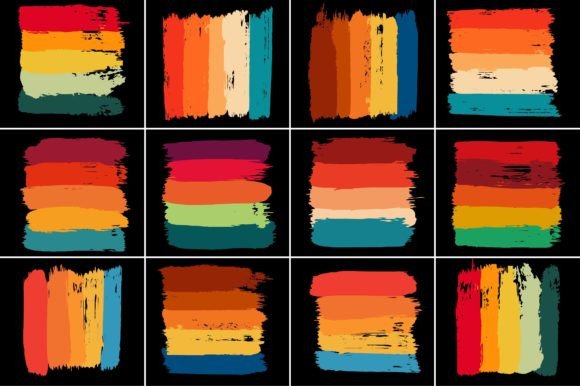
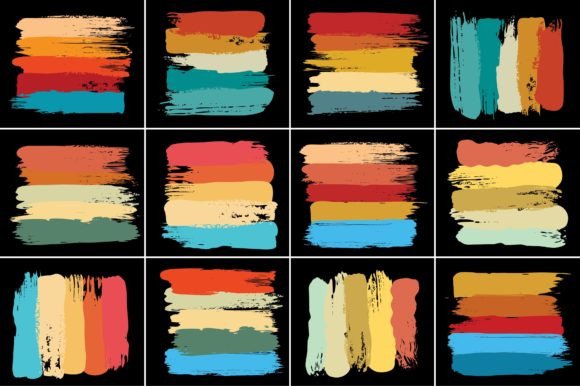
For those selling digital embroidery files or finished goods, the versatility of these 12 PNG files and the single EPS file is a major asset. You can recolor them easily to match seasonal trends—think warm terracottas for autumn or pastels for spring nursery decor. However, remember that these are image files, not stitch files. You must verify the licensing terms before selling them as part of a digital download package. If you are using them to create physical goods like embroidered patches or aprons, ensure your end product adds sufficient value and transformation to comply with standard commercial use policies for stock graphics.
Final Verdict for the Practical Maker
The Retro Vintage Paint Brush Stroke collection is a robust tool for the thoughtful designer. It excels when used as a foundational element for branding, adding character to plain garments and accessories. Its strength lies in its adaptability; it can be the star of the show on a large back-panel design or a subtle accent on a pocket. However, it demands respect for the medium. Do not treat it as a plug-and-play solution. Success with these graphics depends on your ability to interpret the digital ink into appropriate stitch structures, manage fabric tension, and select contrasting thread colors that pop against the background.
Before committing to a large production run or a high-stakes client order, always run a test stitch-out. Check the clarity of the edges, the softness of the hand, and the overall durability. If you take the time to digitize or applique these strokes with precision, they can transform a standard personalized gift into a boutique-quality item that customers cherish. For crafters and entrepreneurs willing to put in the preparatory work, this design set offers a stylish pathway to creating distinct, memorable products in a crowded marketplace.