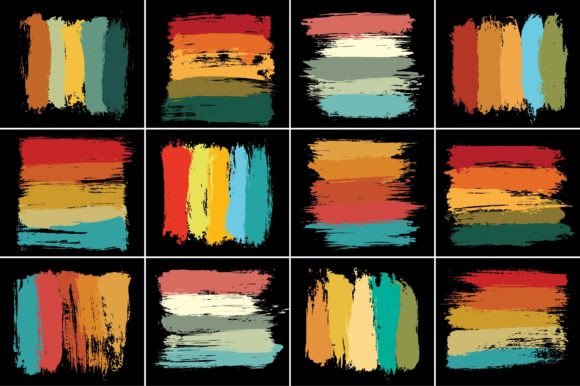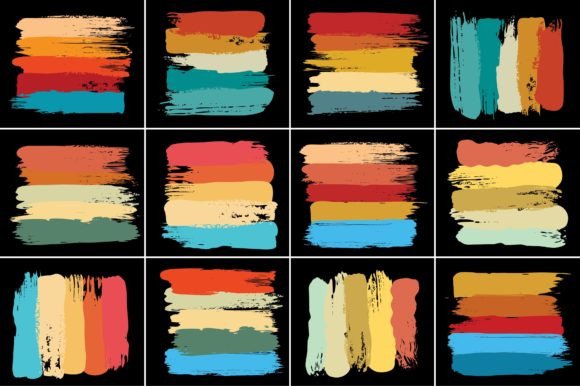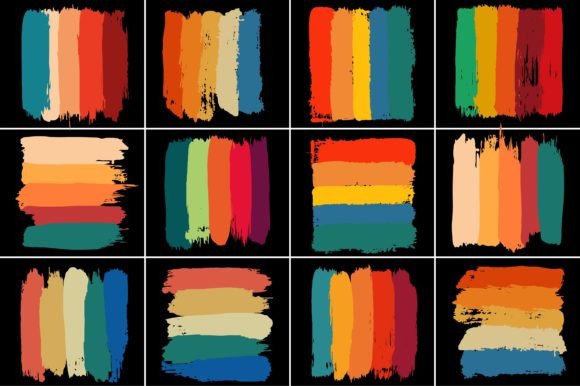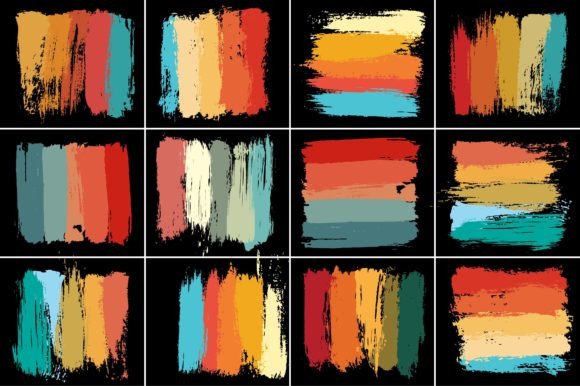
Vintage Retro Paint Brush Stroke: A Designer's Review
As someone who spends hours staring at screens digitizing patterns and selecting threads, I approach new design assets with a critical eye. It is not enough for a graphic to look good on a monitor; it must translate beautifully into thread, withstand the tension of the hoop, and survive the wash cycle. Recently, I evaluated the Vintage Retro Paint Brush Stroke collection, a set of graphics marketed for t-shirt designs and paintable decorations. While the product description highlights its utility in the Crafts and Graphics categories, my job was to determine if these ink-style strokes could truly function as a viable machine embroidery design foundation or if they were strictly limited to print applications.
The Visual Personality and First Impressions
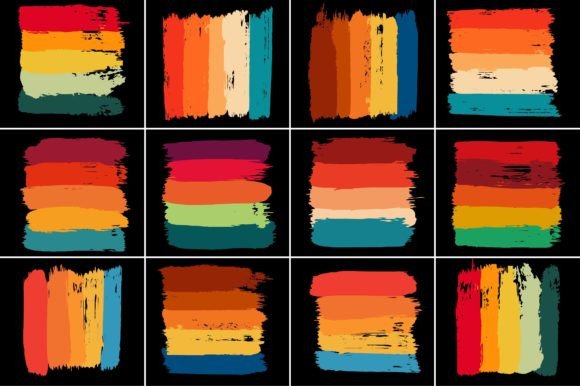
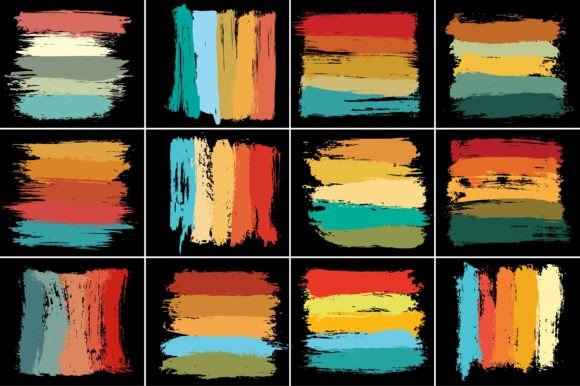
Upon opening the files, which include 12 PNGs at 300 DPI and one EPS file, the immediate impression is one of organic movement. The Vintage Retro Paint Brush Stroke captures that imperfect, hand-painted aesthetic that is currently dominating boutique branding. Unlike rigid geometric shapes, these strokes have a fluidity that suggests speed and artistic freedom. For an embroidery designer, this presents both an opportunity and a challenge. The varying thickness of the stroke mimics the pressure of a real brush, which translates wonderfully to satin stitch columns if digitized correctly. However, the tapered ends and irregular edges require careful attention to stitch density to prevent fraying or losing definition on textured fabrics.
The mood created by these graphics is nostalgic yet modern. They feel at home on a coffee shop apron, a trendy tote bag, or a personalized baby onesie. The "ink" quality suggests a monochromatic or limited color palette, which is excellent for keeping production costs down while maintaining high visual impact. When I imagine these strokes stitched out, I see them working best as a background element for text or as a standalone accent on a pocket or sleeve.
Real-World Application: The Custom Tote Bag Scenario
To test the viability of this asset, I envisioned a specific project: a custom order for a local artist needing branded tote bag design elements. The client wanted something that looked hand-drawn but needed the durability of embroidery. Using the Vintage Retro Paint Brush Stroke as a base, I considered how it would perform on a heavy canvas twill. In this scenario, the stroke would serve as an underlay or a filled shape behind the artist's logo.
If used for sweatshirt embroidery, the soft, brushed texture of the fleece pairs well with the retro vibe of the ink stroke. The design avoids looking too corporate or stiff, which is often a pitfall with standard embroidery fonts and shapes. For a personalized gift, such as a holiday ornament or a kitchen towel, the stroke adds a touch of whimsy. It elevates a simple monogram into a piece of art. However, one must be realistic about the medium. Since the provided files are PNG and EPS, they are technically digital embroidery file sources rather than ready-to-stitch formats. This means the designer must digitize them, converting the vector or raster data into actual stitch commands.
Navigating Fabric Textures and Hoop Limitations
Not every surface is suitable for this level of detail. When working with the Vintage Retro Paint Brush Stroke, fabric choice is paramount. On smooth, tightly woven cotton or polyester blends, the crisp edges of the ink stroke will replicate faithfully. However, on highly textured fabrics like looped towels or thick wool blankets, the fine details of the tapering brush tip might get lost. In these cases, simplifying the digitizing strategy by using a broader fill stitch rather than complex satin columns might be necessary.
Curved surfaces present another hurdle. If you are attempting sweatshirt embroidery on a cap or a structured hat, the curvature can distort the long, sweeping lines of the brush stroke. The design might pull or pucker if the stabilizer isn't robust enough. I strongly advise using a cut-away stabilizer for stretchy garments like t-shirts and baby clothes to maintain the integrity of the shape after washing. For small hoop sizes, you may need to isolate a specific section of the stroke, as the full length of some variations might exceed standard 4x4 or 5x7 hoops.
Critical Considerations for Commercial Use
For Etsy sellers and small shop product creators, consistency is key to building brand trust. The Vintage Retro Paint Brush Stroke offers a cohesive look that can tie together a whole collection of custom apparel. Whether you are making an embroidered patch for a jacket or adding a decorative flair to a pillow cover, the style remains recognizable. However, before listing items for sale, you must verify the licensing terms associated with the EPS and PNG files. Just because a file is included does not automatically grant commercial rights for the stitched finished product or the digital pattern itself.
Furthermore, consider the thread colors. While the preview images likely show black ink, embroidery thrives on dimension. Testing the design in contrasting colors against dark fabrics can create a striking pop, while tonal stitching on light fabric offers a subtle, sophisticated embossed effect. Always run a test stitch-out on scrap fabric identical to your final material. Check for pull compensation, especially at the sharp turns and thin ends of the brush stroke. If the design includes tiny lettering integrated into the stroke, ensure it is large enough to be legible once stitched; otherwise, it may turn into an unreadable blob of thread.
Final Verdict for the Creative Entrepreneur
The Vintage Retro Paint Brush Stroke is a versatile tool in the Crafts and Graphics toolkit, provided the user understands the transition from screen to needle. It excels in creating handmade product lines that value aesthetic character over industrial perfection. It is ideal for holiday embroidery projects, boutique branding, and unique baby embroidery keepsakes where a soft, artistic touch is desired.
However, it demands respect from the digitizer. You cannot simply import these PNGs and expect magic. They require thoughtful conversion into a proper embroidery file format, with careful adjustment of stitch density and underlay settings. If you are willing to put in the prep work, the result is a high-value asset that enhances customer engagement and elevates the perceived quality of your commercial embroidery offerings. Just remember to check the specific hoop size requirements and license agreements before committing to a large production run. With the right approach, this design element can become a signature part of your creative portfolio.